Feeds:
Posts
Comments

Archive for the ‘Uncategorized’ Category

Americans, I’ve observed, are good entertainers. And by this I’m not implying that we’re all qualified to play the leading role in Swan Lake, or that we can belt out the Hallelujah Chorus with perfect pitch. What I’m saying is that Americans, on the whole, know how to throw a good soiree, shindig, bash, or whatever you’d like to call it.

Growing up, I was taught the importance of presentation. If food looked beautiful and appetizing, then it would taste even better. Whatever the occasion, whether a tea party, child’s birthday party, or summer cookout, my mother would put care into choosing just the right invitations, menu, decorations, plates, and music to make sure the gathering was something special. This was her way of saying that both the guests and the person she was throwing the party for, were special and worthy of a true celebration.

I missed many American holidays when I lived in Scotland. For not only do Americans love to celebrate, we seem to find more reasons to do so than many other countries. On top of our extra holidays like Thanksgiving and Independence Day, we also have baby showers, wedding showers, and graduation open houses, none of which were the norm in the UK. But one thing I did take with me from my time in Scotland was an appreciation for simple, spontaneous entertaining, which is perhaps even more useful in building friendships and encouraging others than the carefully planned dinner party type of entertaining. True hospitality is not always convenient, polished, nor planned. It is, however, warm, welcoming, and real.

Most hospitality in Scotland, whether planned or not, involves the drinking of tea. As all devoted tea drinkers know, there is something soothing, healing, and inspiring in a good cup of tea. It is not only reserved for tea parties, nor just an after-dinner treat. It is offered to the workman who has come to fix the boiler. To the neighbor who stops by to return a dish. To the friend who has come round so your children can play together.

Most of the time a wee something to eat is offered along with the hot cuppa. Some hostesses disappear into the kitchen for a few minutes and return bearing a tray laden with mini sandwiches, crackers and cheese, or tray bakes. Other times, especially in the case of busy mums, the hostess raids the children’s biscuit tin, with its mismatched and broken contents. Or, loveliest of all, you might stop by someone’s home and discover they were baking that very morning, and can offer you a warm fairy cake or scone.

The most common tea in the UK is black tea, but green tea, herbal tea, and other varieties such as Earl Grey and Darjeeling are also popular. Whatever the offering, a cup of tea is not only a gift of nourishment, of calm, and of warmth (especially welcome on those blustery Scottish winter days). A cup of tea also says, “Stop for a minute and rest. Let’s chat about the weather, or, if we are true friends, about life.” With a warm cup between your hands and a friend’s face across the table or sofa, problems can be solved, joys and sorrows shared, and spirits uplifted.

In most Scottish households, the kettle is boiled for tea many times a day. It’s a drink for life’s many ordinary moments. But I’ve appreciated the times when a friend has done something to make our gathering a bit special, such as using teacups and saucers instead of mugs, lighting a candle and placing it on the table, setting out decorative napkins, or even trying a different tea such as Lady Grey. These simple touches go a step further in making moments special, and letting your guest know how much you treasure time spent with them.

So next time someone stops by unexpectedly, instead of telling yourself they’re an interruption to your day, offer them a cup of tea, dig out the treat you’ve been waiting for an excuse to open, and sit back and let the laughter (or the tears) flow.

Raspberry Fairy Cakes and Tea

Read Full Post »

“You can never get a cup of tea large enough or a book long enough to suit me.”    ~ C. S. Lewis

Read Full Post »

The moors. Just say the words and I immediately picture a young woman in dark, drab clothes, fighting the wind as she makes her
way across vast, boggy, windswept hills. This is, of course, because one of my favourite authors—Charlotte Brontë— lived for most of her life in the town of Haworth, in the moors of the historic county of Yorkshire, England. It seems that the often bleak, desolate landscape filled the imagination of Charlotte and her sisters Anne and Emily, and inspired their works of fiction.
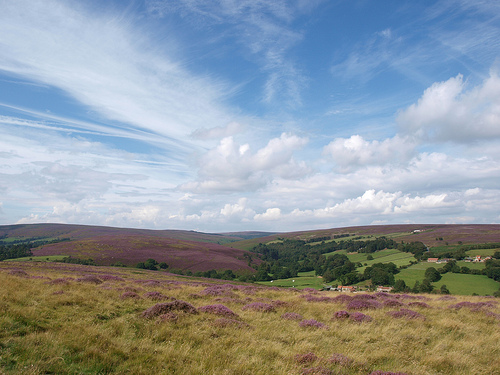
The Moors

If you are not well acquainted with the Brontë  sisters, Charlotte, Anne, and Emily were literary geniuses and authors of some of the best-loved books in the English language. Nothing short of extraordinary, considering they all came from the same family. Their father, the Reverend Patrick Brontë, and their brother Branwell, also saw their works in print.
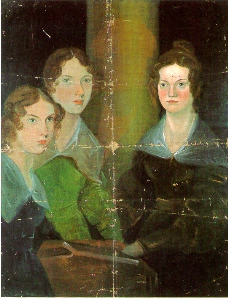
Anne, Emily, & Charlotte

Charlotte’s most famous novel is Jane Eyre. She also wrote Shirley, Villette, and the Professor. Anne wrote The Tenant of Wildfell Hall and Agnes Grey, and Emily wrote Wuthering Heights. Since writing was not considered an appropriate profession for ladies in the middle of the 19th century, the Brontës published under the nom de plumes (pen names) of Currer, Ellis, and Acton Bell.

At the time of publication, their works were acknowledged for their directness and passion, qualities which were sometimes considered by the critics to be “coarse” and “brutal”. The sisters certainly were extremely talented authors and had vivid imaginations, but writers write best about what they know, and the sisters led lives full of tragedy.

The girls had two older sisters, Maria and Elizabeth, and a brother, Branwell. Their mother died in 1821,when the children were very little. In 1824 the sisters first left home to attend a boarding school. It seems it wasn’t the nicest of places, and the experience provided Charlotte with a model for the infamous Lowood School in her novel Jane Eyre. The eldest daughter Maria was sent home from the school because of ill health and died at home, aged eleven. Ten-year-old Elizabeth was sent home shortly after and died the following month. It’s no surprise that the other girls were withdrawn from the school after that. But then their brother Branwell died while still a young man, and Emily and Anne died not long afterwards from tuberculosis, at thirty and twenty-nine years old. It’s hard to understand why they didn’t move from their home, when the sanitation and water supply in the town were so polluted and inadequate, and when the average age at death was only twenty-five. But perhaps it was too late by the time they realized the effects their environment had on them, and I suppose it’s hard to comprehend how ill-informed not only the general public but also doctors were in those days.

In spite of that, I would very much like to travel back in time and be a guest in the Brontë parlour. I would choose a howling windswept night, when the sisters would have pulled their chairs even closer around the fire so they could read to each other and discuss their novels. Perhaps being present for such discussions would have some beneficial effects on my own literary skills. But
alas, such a visit is not possible, and I shall have to content myself with reading their finished works.

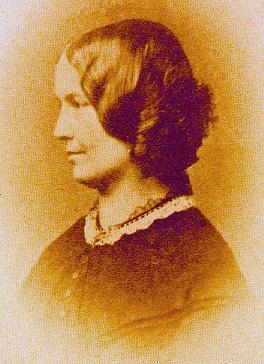
Charlotte Bronte

While I must admit to having read only two of their books—Wuthering Heights and Jane Eyre—both novels made a lasting
impression on my mind, unlike so many other books I’ve finished, whose characters, titles, and story lines have long faded from memory. That being said, I didn’t particularly like Wuthering Heights. It’s a bit too strange and a bit too sad for my liking, although
don’t take my word for it. The book isn’t considered one of the world’s best for nothing. Jane Eyre, on the other hand, is one of my very favourites. It’s that rags to riches theme again—the poor, plain, orphan girl who falls hopelessly in love with her wealthy yet
misunderstood and somewhat dangerous employer—combined with the dramatic setting of an English manor house and all the secrets, mysteries, and drama bound to be uncovered in such a place. And then there are the wonderful but surprising themes of redemption, forgiveness, and grace . . . but more on that next time.

At the moment, I’d like to hear which of the Brontë novels you like best. What is your opinion of Wuthering Heights? And which book do you suggest I read next? Something by Anne, perhaps?

 ~~~

Let me suggest the following websites for more information and pictures on the Brontës and their works . . .

The Bronte Family – Exploring the lives, literature, and art of these important Victorian women writers.  http://www.brontefamily.org/

Jane Eyre – A guide to film and stage adaptations of the book from as far back as 1909.  http://eyreguide.awardspace.co.uk/adaptations.html

Haworth – The Bronte Parsonage Museum website. http://www.bronte.org.uk/index.php?option=com_frontpage&Itemid=26

Read Full Post »

Do you suppose that as Prince William slipped the gold ring onto his bride’s finger last Friday that her mother might have turned to Kate’s father and whispered, “I was sure she could not be so beautiful for nothing!” just as Mrs. Bennett said to her eldest daughter Jane after the announcement of her engagement to the wealthy Mr. Bingley in Pride and Prejudice.

Even more than we like the princess getting the prince, we do so like it when the Cinderella–the common girl–gets the prince, do we not? So long as she is good and worthy, of course, and from what we can tell, Kate Middleton–or the Duchess of Cambridge, I suppose we must now address her–does seem to fit the shoe very well.

As Kate stepped onto the Buckingham Palace balcony and saw the crowds waving and cheering below, her first word was “Wow.” I smiled to myself, for it gave me the tiniest glimpse of what it must be like to be in her real life princess shoes. To be suddenly moved from just another middle class girl to the wife of the future king. Wow indeed.

He stood staring into the wood for a minute, then said: "What is it about the English countryside — why is the beauty so much more than visual? Why does it touch one so?" ~ I Capture the Castle

And speaking of first lines, how well-acquainted are you with some of our other favourite literary heroines? Can you identify the below novels by their first lines?

  1. Miss Brooke had that kind of beauty which seems to be thrown into relief by poor dress.
  2. I write this sitting in the kitchen sink.
  3. Mrs. Rachel Lynde lived just where the Avonlea main road dipped down into a little hollow . . .
  4. There was no possibility of taking a walk that day.
  5. “Christmas won’t be Christmas without any presents,” grumbled Jo, lying on the rug.
  6. “The Signora had no business to do it,” said Miss Bartlett, “no business at all.”
  7. The family of Dashwood had long been settled in Sussex.
  8. I wish I could write that I began my journey by train.
  9. It is a truth universally acknowledged,  that a single man in possession of a good fortune, must be in want of a wife.
  10. To begin with the old rigmarole of childhood.
  11. Emma Woodhouse, handsome, clever, and rich, with a comfortable home and happy disposition, seemed to unite some of the best blessings of existence; and had lived nearly twenty-one years in the world with very little to distress or vex her.
  12. ‘HASTE TO THE WEDDING’ ‘Wooed and married and a’.’
  13. When Mary Lennox was sent to Misselthwaite Manor to live with her uncle everybody said she was the most disagreeable-looking child ever seen.
  14. Thirty years ago, Marseilles lay burning in the sun, one day.
  15. Once on a dark winter’s day, when the yellow fog hung so thick and heavy in the streets of London that the lamps were lighted and the shop windows blazed with gas as they do at night, an odd-looking little girl sat in a cab with her father and was driven rather slowly through the big thoroughfares.
  16. I have just returned from a visit to my landlord–the solitary neighbour that I shall be troubled with.
  17. Scarlet O’Hara was not beautiful, but men seldom realized it when caught by her charm as the Tarleton twins were.
  18. No one who had ever seen Catherine Morland in her infancy would have supposed her born to be an heroine.

~ ANSWERS BELOW ~

1. Middlemarch by George Eliot

2. I Capture the Castle by Dodie Smith

3. Anne of  Green Gables by L.M. Montgomery

4. Jane Eyre by Charlotte Bronte

5. Little Women by Louisa May Alcott

6. A Room with a View by E.M. Forster

7. Sense and Sensibility by Jane Austen

8. Beyond the Castle by Avonlea Q. Krueger *

9. Pride and Prejudice by Jane Austen

10. Wives and Daughters by Elizabeth Gaskell

11. Emma  by Jane Austen

12. North  and South by Elizabeth Gaskell

13. The Secret Garden by Frances Hodgson Burnett

14. Little Dorrit by Charles Dickens

15. A Little Princess by Frances Hodgson Burnett

16. Wuthering Heights by Emily Bronte

17. Gone With the Wind by Margaret Mitchell

18. Northanger Abbey by Jane Austen

*Ah, I couldn’t help but add the first line to my own novel, Beyond the Castle. My heroine’s name is Florence Elliot, and I think you shall like her very much. I hope to give you the chance to get to know her better in the weeks to come!

~~~

Coming up in my next post, more on the life of Charlotte Bronte, author of Jane Eyre, as well as film locations and other information on the most recent adaptation of the novel.

Read Full Post »

I suppose my first piece of British literature was the hardcover copy of Mother Goose Nursery rhymes that I received as a young child. I still remember my fascination with the strange words and illustrations–tumbling bridges, broken eggs, blind mice, and ashes. Not always the cheeriest, these nursery rhymes, though there are a few with a more positive theme. Hot Cross Buns, for example. Do you recall? 

Hot cross buns

Hot cross buns

One a penny

Two a penny

Hot cross buns

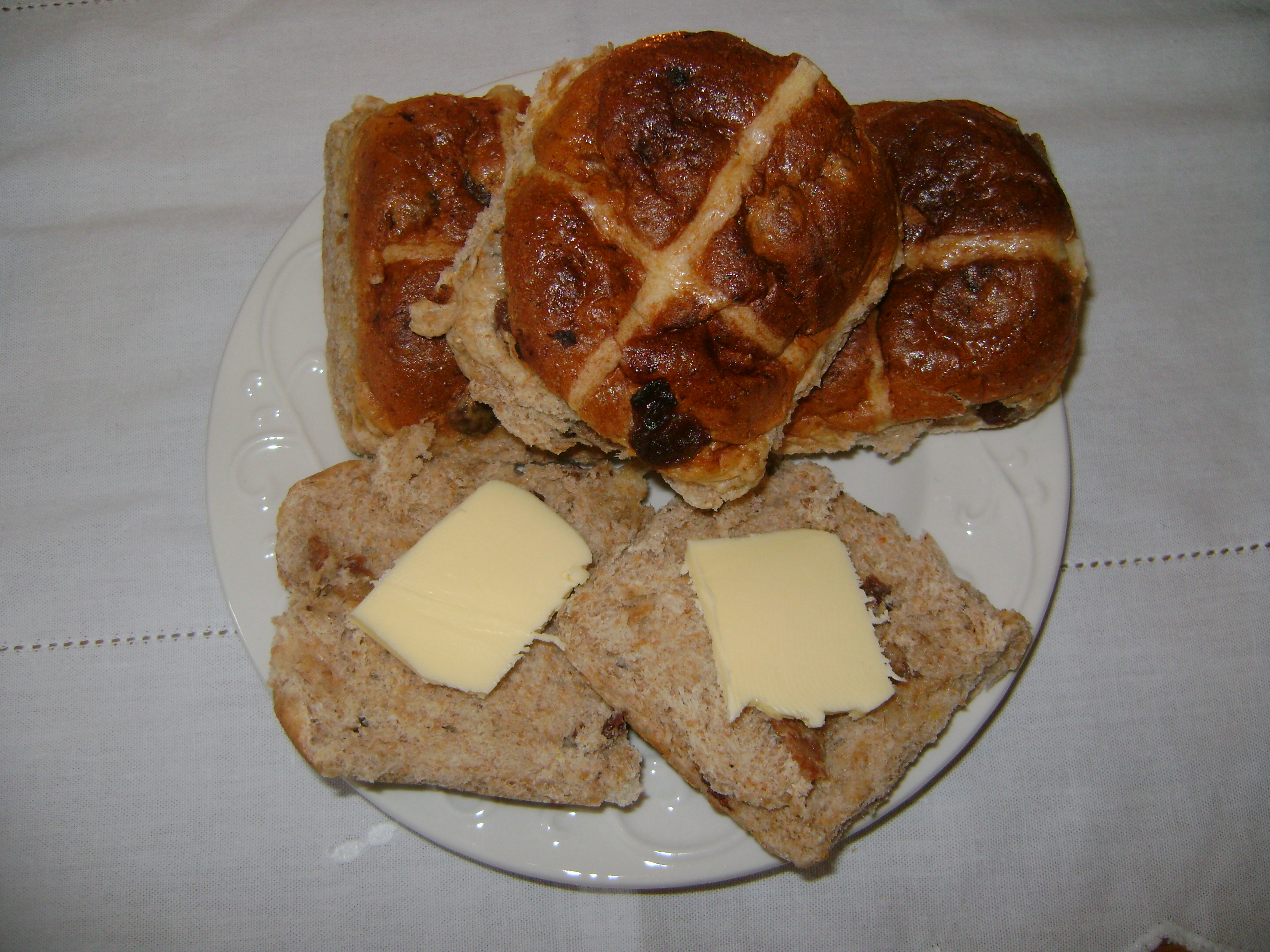
I always longed to taste a real hot cross bun, along with fish and chips, crumpets, Turkish delight, and all the other mysterious British foods that I’d read about over the years. But I never got the chance to sink my teeth into one of these sweet, spiced, raison-dotted Easter treats until I moved to Scotland. Now, they’re one of my own favourite accompaniments to an afternoon cup of tea. They can be eaten lightly toasted or cold, and spread with generous lashings of butter (I never said they were particularly healthy, just tasty, although the ones pictured are whole grain!).


If you live someplace where hot cross buns can’t be got (it’s worth having a look in your local grocery store just to be sure), you could have a go at making your own. Try this recipe from the BBC– 

http://www.bbc.co.uk/food/recipes/hotcrossbuns_397 .

The recipe does involve kneading and yeast, and if that sounds just a wee bit too scary, you could try buying some plain or sweet buns or rolls and making crosses with white icing.

Or, if like me, you live in the UK and perhaps feel that you’ve already consumed enough hot cross buns for the season, well, go on a have a few more, but in a different form, perhaps? The following dessert would make a lovely end to your Easter dinner.

HOT CROSS BREAD & BUTTER PUDDING

Cut some hot cross buns in half, add a thin layer butter, and then put them back together. Place into a baking dish and sprinkle with chocolate chips. Beat 2 eggs with 1 cup of milk and a tablespoon of sugar and pour the mixture over the buns. Then sprinkle a few extra chocolate chips on top. Bake at gas 3, 170 C, fan 150 C, 325 F for about 30-35 minutes, or until just set.  

~~~

To make your hot cross buns more than just a delicious treat, read about the very first Easter in the Bible, in Mark chapters 14 to 16. Or, if you have children, use the crosses as an opportunity to speak about the real meaning of Easter with the precious little ones in your care. You could talk about the shape of the buns, too, which can remind us of the stone that the angels rolled away from Jesus’ tomb. For the real wonder, of course, is not that Jesus died for us, but that he rose again.

For other ideas on how to make your Easter special, see my previous post on making easy, dainty Victorian Easter cards.

Enjoy!

~ Avonlea


Read Full Post »

« Newer Posts