Feeds:
Posts
Comments

Posts Tagged ‘Reverend Alex Muir’

I have stories yet untold. I suppose I wasn’t sure if they were mine to tell. But some stories deserve to be told, and some people deserve to have their story told, though they cannot tell it themselves . . .

In the far north of Scotland is a castle. A small, elegant, brownish-pink castle–a stone’s throw from the sea, yet bordered by attractive gardens, with sheep-grazed pastures and woodlands beyond. It is called the Castle of Mey, and belonged to the late Queen Mother. Not the Queen who passed away one year agone, but her mother, HM Elizabeth The Queen Mother. She purchased the ramshackle castle in 1952, and set about restoring both castle and grounds. It became her summer home (with another visit every October). Here, she enjoyed the natural beauties of Scotland, and here she entertained guests. I couldn’t tell you much about those guests–apart from one. About one couple’s visits to The Castle of Mey, I know quite a lot. I know, because they told me themselves.

The minister of The Church of Scotland Parish of Canisbay and Keiss, the region of Scotland called Caithness where the castle is situated, was for a time one Reverend Alex Muir, MA BD. To you, just a name, to me a thousand memories–most of which occurred at a modest house in the small Scottish city of Inverness. Again, just a house, just number 14, to me so much more. Alex (retired from the ministry by this time) and his wife, Catriona, were members of our church. They were acquaintances who became, in a matter of no time at all, close friends. Me, a young American, still smitten with Scotland, still lonely from time-to-time, still prone to say the outlandish things that Americans tend to say while on foreign soil. John, a Scot, but not known in the “highlands and islands,” and with much to occupy him in his new position at work. We two just a young couple, trying to find our way in the world.
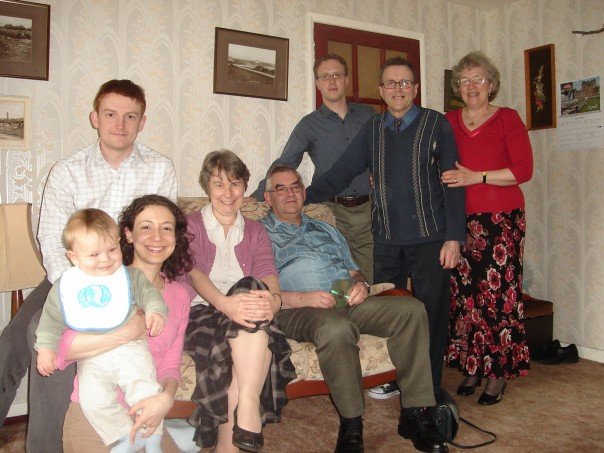
An afternoon at “number 14” – Alex & Catriona are far right

We were invited for lunch one Sunday–a Sunday that became the first of many–and what a delight to be in the home of new friends. I remember the sunny dining room with a view of Catriona’s colorful garden. I remember the blue, yellow, and green budgies, chirping and flitting about their large cage. I remember the black and white photo of Alex and The Queen Mother, hung on the wall. The story behind that photo came to me in stages over the next few years, on visits to number 14. Oh, I loved to be there, amid the old books, and photographs, and cassette tapes–all the ideas, and stories, and melodies, wrapped up inside. Oh, I loved the smell of Catriona’s fluffy scones just out of the oven. Oh, I loved to chat with their boys (all round about my and John’s age) and to hear the stories Alex would tell. Oh, I loved the love in that place.

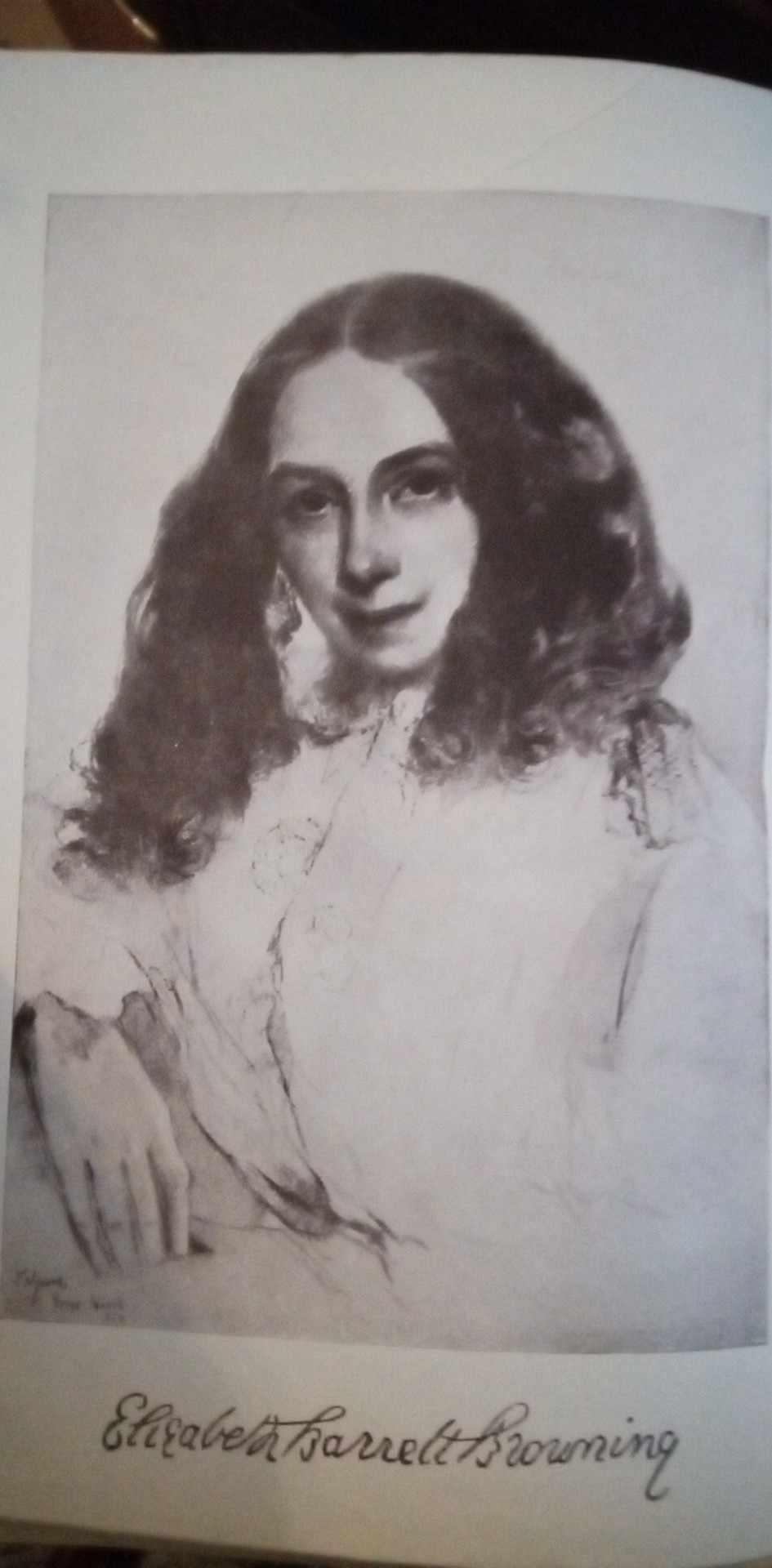
Alex, a teacher before his years as minister, was a true Encyclopedia of Scottish history and literature. I remember lending him my CD of Lorena McKennit’s musical rendition of The Lady of Shallot. I rather think that could Alex have been transported to The Eagle and Child Pub in Oxford during the 1940s, he would have joined in with the discussions of C.S. Lewis, J.R.R. Tolkien, and the other Inklings without any effort at all. One day, he presented to me his copy of Mrs. Browning’s Poetical Works, saying that the poet’s hair rather reminded him of mine. But I digress . . .

Literature was not, however, the foremost thing on Alex’s mind. The Scottish Christian revivals of the 19th century–which had transformed so many lives and communities–and church music were the things he spoke about with the most passion. He was a great admirer of American hymnwriter Ira Sankey, composer of Just as I Am, Have Thine Own Way Lord, I Surrender all, and many others. Alex was also an amateur composer and lyricist himself–one who had attracted the notice of The Queen Mother, and in time, The Queen herself . . .

During his years as minister in Caithness, Alex and Catriona (as the parish minister and his wife) were invited to dine at The Castle of Mey on multiple occasions. They came to know and hold great respect for The Queen Mother, and Alex felt quite convinced of her sincere faith in the Lord. One time, she requested a tour of their home, the Manse. Catriona dutifully and I am sure graciously consented. She later told me that when The Queen Mother glimpsed her oldest son’s room, plastered with posters of footballers and movie stars, that she remarked, “All these precious things.” Catriona declared that The Queen Mother always knew just what to say.

The photo from the dining room wall – Alex accompanying The Queen Mother outside Canisbay Kirk

On learning that Alex was musical, The Queen Mother asked him to bring along his guitar on his visits to the castle. He played Scottish ballads, folk music, and his own compositions. There’s a story about her making a request for “The Jeely Piece Song.” It would have been at the castle that The Queen, on one of her visits to her mother, would have first met Alex and Catriona and heard him play. It’s all rather like a Scottish fairytale, castle and all, but the story doesn’t end there . . . The Queen apparently so loved Alex’s beautiful, haunting melody, “Bays of Harris,” that she selected it to be played at her funeral, should she pass from this life while in Scotland–which she did. My heart swelled as I watched the talented Karen Matheson sing the words of Psalm 118 in Gaelic to Alex’s melody. How I wished Alex had been there to see his melody performed for The Queen one last time! Bays of Harris was also used at the funeral of former parliament member Winnie Ewing, in Inverness Cathedral. It was sung there by another famous Gaelic singer, Julie Fowlis.

Alex went to his own Heavenly Castle in 2010, and Catriona followed ten years later. I think of them often. A piece of my heart went to Heaven when they left. But oh, so glorious to know their lives–and Alex’s music–are yet reaching hearts and inspiring lives. I wondered what had inspired The Queen to choose Psalm 118. She was very particular in all she said and did. Every Christmas, The Queen gave a Christmas speech, and without fail, every year she spoke about the Savior. Wise and thoughtful woman that she was, she would have known that her funeral was her last chance to “give a speech,” her last chance to address the world. Years before she passed, she carefully chose every word–from hymns to Bible texts–that would be part of her final day. Could it have been verses eight and nine that she wanted to impress upon the hearts of all who were listening that day?

It is better to take refuge in the LORD

than to trust in man.

It is better to take refuge in the LORD

than to trust in princes

-Psalm 118:8-9

It’s been twenty years now since The Queen Mother passed, a year since The Queen herself–I have confidence that she, Alex, and Catriona are now reunited in their glorious bodies–but their legacies live on. And so will the legacies of Alex & Catriona, for all who knew them, and for all who are touched by Alex’s music–today, and for generations to come.

Bays of Harris, Psalm 118, sung by Karen Matheson, former singer with the group Capercaillie, at St Giles Cathedral in Edinburgh for the Queen’s funeral (sadly, credit was given to the man who arranged the melody instead of to the composer, Alex)

Psalm 63 sung by Clare Ross to Bays of Harris. Clare recorded this piece with Alex in the 1980s. You will hear English at the end.

God Has Given Us a Dream – Hymn and melody by The Reverend Alex Muir, MA BD, sung by singer and filmmaker, Matthew Todd of Fellowship Film


Avonlea xo

Learn to love mornings & grow in faith . . .

Bookish devotionals for busy moms. Sign up here FREE

Connect with me on Instagram/Facebook @happy.little.sigh

Happy Little Sigh

Homemaking Inspiration from Literature  ♥

PS Enjoy the story behind the writing of Bays of Harris, including an interview with Alex, below ⤵
Read Full Post »

From her supermarket bags she unpacked the makings of our meal—potatoes, and veg, and a chicken, still raw. And when I saw it all my heart leapt, because I knew she’d stay a while.

Work had called John away. And days were long, but nights were longer in our wee stone cottage, just baby and me. But that night she came. We had painted our kitchen walls Egyptian Sand, and in their yellow glow I watched as she peeled the veg, covered the chicken, and set it all to cook. I watched her, and we chatted, and then she sat with me. While I nursed my baby. While I gave him his bath. While I changed him and finally laid him down to sleep. And then we ate together. Me, just 27. Her, exactly 30 years older, though the years never mattered much to me. We ate, and we talked, and we sat. Catriona was her name.

That sitting was not the first time, nor was it the last.  Early days in our marriage, we’d often find ourselves at her table. Sunday dinner, beneath the black and white photograph of her husband Alex with the Queen Mother. Alex’s black robes flapping as he greeted the royal outside the old stone church. While we talked with her boys, laughed at their yellow budgie, Bart, smells would drift from the kitchen hatch–roast beef and boiled potatoes. To our right, through the great picture window, Catriona’s garden, where Scottish sun set to sparkle drops of Scottish rain on the lady’s mantle leaves. Catriona would scurry in the kitchen, the rest of us would speak.

224122_8725245526_7352_n

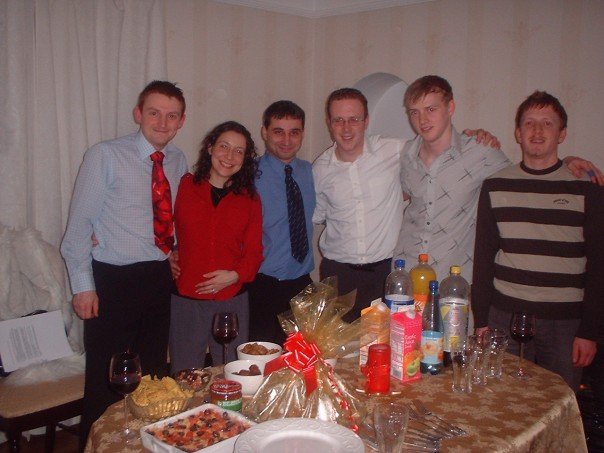
A Christmas Party at our cottage with three of Catriona’s boys, Graham, Ian, and Alistair. Here, I’m expecting the Professor.

And her four boys became like brothers—or like cousins to us, at least. The meal would begin with Catriona’s soup. It always ended with tea. Then the stories came, and the music, when Alex took down his guitar. True tales of dinners with Queens, talk of revival, Celtic melodies that stirred the heart. All shared with the modesty and ordinariness of their brown carpet, their family photos, their stacks of tapes and CDs. The sacred disguised as the ordinary. Sometimes I marveled that they enjoyed the company of little old me.

Catriona was a teacher, and in those days, so was I. And we taught a year in the same school, my class so naughty I’d hide in the cupboard at lunchtime and cry. But after school I’d feel better, when Catriona sat with me. She would crunch her apple, and I would grade away. At report card time, she came to our flat, helped me write them, and once again, she sat.

And when we bought our ramshackle cottage, she came to help with repairs. With the overgrown garden, the red shag carpet on the stairs. When summer came she took cuttings from her flowers, taught me how to make them grow. Climbing clematis, purple hebes, and the bright primrose. And she taught me how to make chicken stock. How she got her scones fluffy (though mine will always be like rocks). I will always remember the squeak in her young voice when she declared, “You’re doing an amazing job!”

225132_8725190526_6583_n

A wonderful Sunday afternoon at Catriona’s (she’s in red), along with her dear husband Alex, son Graham, and friends George and Elizabeth Barnie.  The Professor was almost one.

When the Professor was born, she invited me round—tired, sleepless, bewildered new mum that I was—and promptly sent me for a nap. Below me, my baby in her arms, she rocked him, she soothed him, she sat. I heard all about her boys—stories from when they were small. And I didn’t dream I’d be like her, with four handsome sons in all. And their first bed was his first bed—a little wooden cradle lent to me. And I can hear her say that “Boys are best!” with cheery certainty. Thirty years between us then, but in those days I considered her my very best friend.

When it came time to move south three hours to Dundee, she came for days to help me pack. Moving day, she insisted on driving with me, though I can’t recall how she got back.

As often as I could, I’d go see her. There’d be soup, and scones, and tea. And she’d take out the toys that were once her boys, and spread them out for mine. “You’re such a clever mum! Such an inspiration!” she’d always say. And I was so content sitting with her, just whiling the hours away.

36372_10150206387790527_527134_n

My sister and niece came to visit from the States. We took Catriona out for tea. I remember John prayed, thanking God for Catriona, which made her cry. The Professor was four.

I learned so much about her, from all those hours we sat. She wasn’t fond of goat’s cheese. She wrote in teensy, tiny, sometimes hard-to-read script. She never said a bad word about another person. And she never complained. Not once.

When we moved back to the States, and she was far away, I’d think of her nearly every day. John and I would speak of “being a Catriona.” We both knew what that meant. I treasured every Christmas card and letter that she sent. I remembered the things she taught me. I remembered the ways she’d helped. But most of all I missed the times when together, we just sat.

When we returned a few years later, she welcomed us with a smile. There was soup, a meal, and tea, and just sitting together a while. She brought out toys for the boys. And she spoke of the joys of the girls now in her life. Daughters-in-law! A granddaughter! She told me they were “just great!” And I longed for a girl, but like Catriona, I supposed I, too, could wait.

Another sweet friend held a gathering—soup, tea, and cakes. And my heart ached from the joy of seeing each dear, sweet face. When the night ended Catriona was the last one to depart. Before she left I gave her hug and a soft tartan heart.

Earlier this year I emailed her, sharing our adoption plans. Of the little girl I’d longed for, because I knew she’d understand. And I dreamed of returning to Scotland, with all my family. I couldn’t wait to see Catriona, and share soup, and scones, and tea. I couldn’t wait to feel the love as together we just sat. Because I guess in my heart, I always felt a bit like Catriona’s lass.

CAM00162

At Auntie Catriona’s house on our last visit to Scotland. See all her lovely flowers? Here, I’m expecting Little Bear. The Professor was eight.

But early this summer, I got it. A message from her son. And she hadn’t been ill, but an accident, and suddenly she was gone. And I could not stop the crying. And I never knew this pain. And now I understand, so this is what it is…

So this is what it is . . . to be distracted a moment with some ordinary task—spreading the boys’ toast, or tucking in chairs — only to remember and have it hit me again like a splash of ice water on my face, this disbelieving, numbing shock.

So this is what it is . . . to feel a sense of panic, an urgency that something must be done, even as my muddled brain tries to comprehend that nothing. can. be. done.

So this is what it is . . . to search frantically through Facebook posts and old boxes of cards and photos, just to see a face, and read old words once again.

And I could weep, and weep, and weep.

I mourn that I will never again see a Christmas card from her lying on the mat. That I will never again hear her cute, squeaky voice say, “Avonlea, you’re such a pet!” That I will never again stand in her garden while she points out some new flower she has grown. That when we next visit Scotland we won’t sit at her table having tea and scones. That I will never again feel the strength and love I felt from sitting there with my friend. It’s like not being able to ever go back home again.

CATRIONA

“Mrs. Muir’s Boys,” Kenneth, Graham, Ian, and Alistair

She taught me so much. About cooking. About gardening. About asking God’s help to love the difficult people in our lives. But most of all she taught me the life-giving power of offering your time. Of rolling up your sleeves. Of being there. Of showing up. Of simply sitting with someone through life.

For that is what she did. She sat with me through life.

And there is such power in it. In sacrificial, real, tangible love.

She was a teacher, a baker, a gardener, a friend, a wife, a granny, a mum. And though her achievements might not seem noteworthy by society’s standards, for me she was as splendid as she could possibly be. She loved with me an everyday, ordinary, life-changing love. For even when her husband was ill, and she had her own family to care for, she made the time to help a new wife and mum. Despite the challenging moments in her own life, she made a point to sit with me through mine. And I loved her so very much.

And I could not bear the searing pain of such a loss if I did not believe with all my heart that one day, we will be sit together again in a garden, so like her own (oh, won’t she love that Celestial Garden!). If I did not believe her to be already with the Saviour she loved and lived for, her tears already wiped dry. If I did not know that she has been delivered safely to her Heavenly Home (2 Timothy 4:18). She has been delivered safely, though we from this end cannot see. She is safe, and she is home.

A piece of myself has gone there with her, and there it will remain until we meet again.

And the realms of Heaven grow closer still . . .

Many daughters have done well,
But you excel them all.
Charm is deceitful and beauty is passing,
But a woman who fears the Lord, she shall be praised.
Give her of the fruit of her hands,
And let her own works praise her in the gates.

~ Proverbs 31:29-31

Avonlea x

Find me on Instagram @happylittlesigh or Facebook @happylittlesigh

Happy Little Sigh

Finding beauty in the everyday 


Read Full Post »